Many businesses no longer run everything in one place. Some apps live in AWS, others run in Microsoft Azure or Google Cloud, and a few are still on private servers.
Each of these choices can make sense on its own. However, together they can turn into a puzzle that is hard to manage, secure and keep on budget.
A managed service provider (MSP) is a company that takes care of your cloud environments for you, from planning to daily upkeep, so your team doesn’t have to juggle every platform alone.
Below, you’ll find a short guide to how multi-cloud operations work, followed by 4 providers that can take them on for you.
What Multi-Cloud Operations Mean For Your Business
Multi-cloud simply means using more than one cloud provider at once.
A company might run its online store on AWS, keep email and files in Microsoft Azure and store private records on its own servers. However, every platform comes with its own dashboard, security settings and bill.
That’s why the real work starts after setup. Someone has to keep these pieces healthy and connected every day.
In practice, multi-cloud operations usually cover 4 jobs:
- Watching performance and fixing issues across every cloud.
- Keeping security rules and access consistent everywhere.
- Deciding where new apps and data should go.
- Tracking spending so no bill comes as a surprise.
An MSP takes these jobs on, so your team works with one partner instead of juggling separate tools.
Managed Service Providers For Multi-Cloud Operations: Top 4 Reviewed
| Aptum | Rackspace Technology | RapidScale | Flexential | |
| Main Focus | Placing each workload where it belongs and running it | Professional and managed services for hybrid multicloud | Strategy, migration and ongoing cloud operations | Cloud, connectivity and managed public cloud |
| Clouds Covered | Aptum IaaS, Azure, AWS, GCP, Proxmox and KVM | AWS, Azure, Google Cloud, VMware and OpenStack | AWS, Azure, Google Cloud and VMware | AWS, Azure and Flexential’s own cloud |
| Management Tool | Aptum Prizm | Rackspace Fabric | Single operating model with FinOps | Flexential Xperience Portal |
1. Aptum

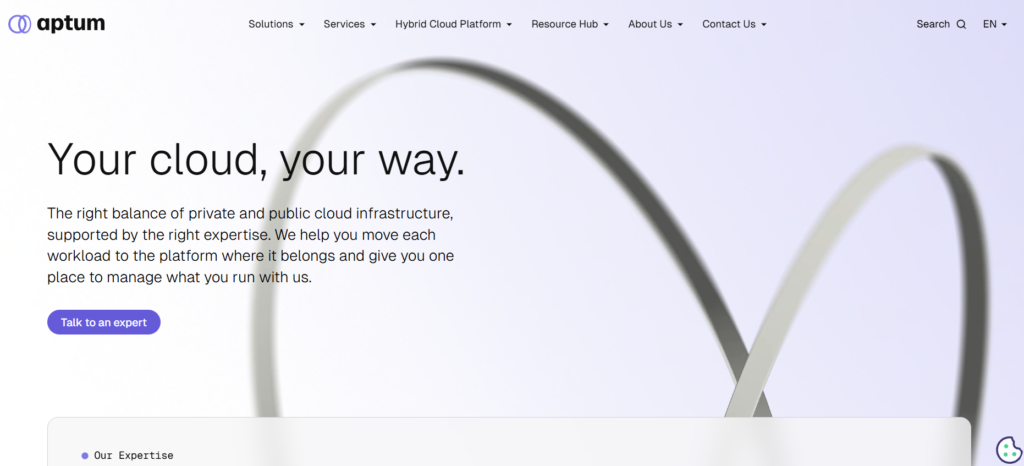
Aptum gives businesses that use more than one cloud a single team and a single portal where its own cloud and parts of Azure and AWS are side by side. Its services cover its own Aptum cloud, private cloud and dedicated servers, as well as managed Azure and AWS.
When cloud bills are spread across several providers, it can be hard to tell what is driving the cost. Aptum says it models where your cloud spend really goes, moves workloads that would cost less to run elsewhere and then manages them so the savings hold.
What You Get
- Aptum Prizm: Your team can set up Aptum Shared Cloud and Dedicated Cloud from this portal and check Azure and AWS usage next to them, with access controls, live cost figures and one activity log.
- Connected environments: Aptum sets up networking between your sites, clouds and offices, so they act like one connected estate.
- Day-to-day care: Its managed services team takes care of monitoring and patching.
- Hyperscaler partnerships: Aptum partners with all three leading hyperscalers, and says this lets it give unbiased advice.
- One team from start to finish: The same people handle the assessment, the move and the daily management.
- Data sovereignty: Aptum can help you keep your data in-region and show where it stays.
- Certified data centers: Its data centers hold ISO 27001 and SOC 2 Type II certifications.
Who It Suits
Companies with cloud spending spread across several providers that want one team to sort it out and keep it running.
2. Rackspace Technology

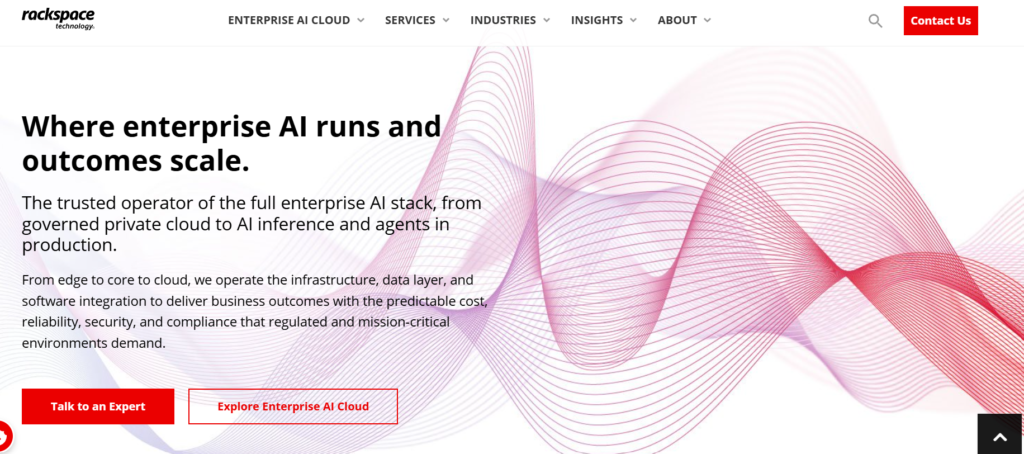
Rackspace Technology has worked in hosting and cloud for more than 25 years. Its multicloud specialists review how your apps and data connect. Then its teams build and run a setup that joins public clouds, private clouds and on-premises systems into one connected environment.
What You Get
- RackConnect Global: Joins your Rackspace dedicated servers with other data centers and with the clouds you pick, such as AWS, Azure, Google Cloud, VMware and OpenStack.
- Rackspace Fabric: Brings all your cloud platforms together, so governance, ticketing, billing and tagging work the same way across them.
- Data Freedom: Your data stays available to whichever cloud services you need, which helps you avoid being locked into one provider.
- Platform options: Rackspace also offers managed and professional services for setups like VMware Cloud on AWS, AWS Outposts, Azure Stack and Google Anthos.
- Large expert team: It has more than 1,700 cloud engineers across Linux, Windows and VMware.
Who It Suits
Companies that want to connect dedicated hosting, private clouds and several public clouds into one managed setup.
3. RapidScale

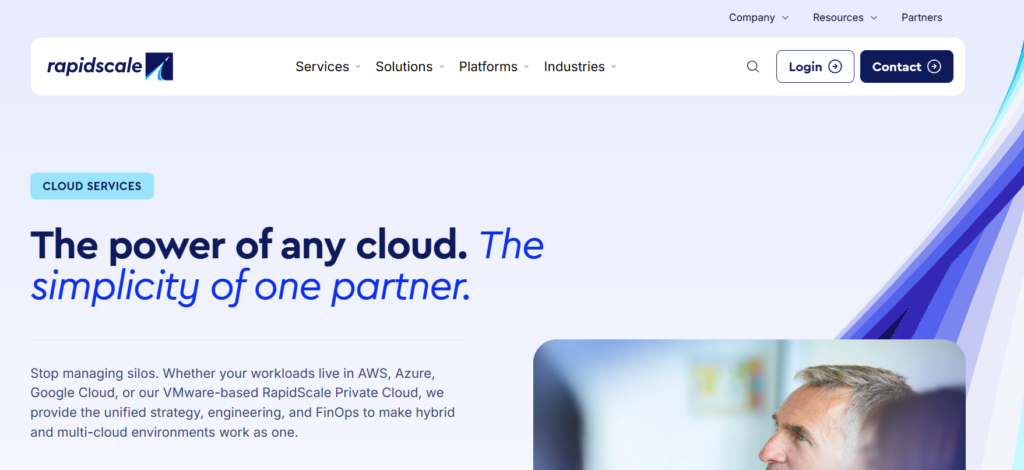
RapidScale makes hybrid and multi-cloud setups work as one across AWS, Azure, Google Cloud and its own VMware-based private cloud. Its team plans your cloud around your business goals, moves your workloads and then runs everything day to day under a single operating model.
What You Get
- Unified management: You can run AWS, Azure and Google Cloud through one operational framework.
- Workload optimization: Each workload goes where it performs well and costs less.
- Built-in FinOps: FinOps is the practice of tracking and managing cloud spending, and RapidScale applies it across every provider.
- Migration support: It moves workloads across AWS, Azure, Google Cloud and VMware environments and helps you exit data centers.
- Round-the-clock care: Certified engineers respond to incidents and manage compliance 24/7/365.
Who It Suits
Teams that want help with planning, moving and running several clouds while keeping spending under control.
4. Flexential

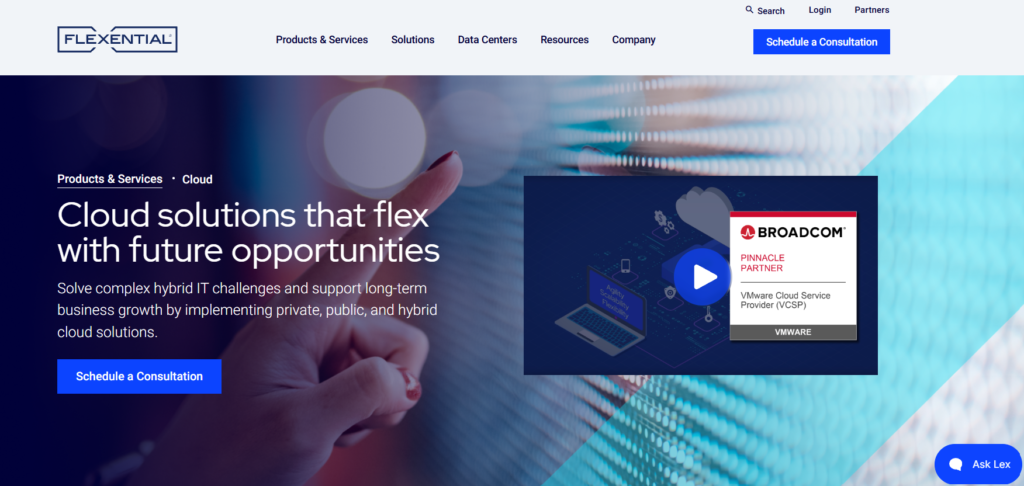
And last but not least, Flexential brings cloud services, data centers and network connections together through its FlexAnywhere platform. It can run Azure and AWS for you, offers its own private and multi-tenant clouds and builds secure networks that help your clouds work together.
What You Get
- Managed public cloud: Flexential runs your public cloud for you and gives you a real-time view of it.
- CloudOps Foundations: Modern cloud operations with automation, monitoring and security, plus 24x7x365 support.
- Managed Containers: Kubernetes management in AWS, Azure or FlexCloud for apps packaged in containers.
- Cloud fabric: Design and running of private, secure connections across cloud providers and hybrid setups.
- Flexential Xperience Portal: A portal where you watch and manage your Flexential environment in real time.
Who It Suits
Companies that want managed public cloud, private cloud, colocation and network connections from one provider.
Conclusion
Using several clouds gives a business more freedom, but only when someone keeps all the parts in order.
Each provider here handles that job in its own way։ Aptum helps you decide where each workload belongs and then keeps it running. Rackspace Technology keeps governance, ticketing and billing working the same way across many platforms. RapidScale guides you from the first plan to everyday management with one team. And Flexential lets you run cloud, containers and networking with a single partner.
In the end, list the clouds you use now, then pick the partner whose way of working matches the help you need.