

Most of the conversation around AI in media production focuses on what creators and producers can do with new tools. Far less attention goes to the developers responsible for actually wiring those tools into existing pipelines.
Generative AI has moved from experimental to operational faster than most teams anticipated. Content creation workflows now involve model integrations, API orchestrations, and inference pipelines that someone has to build and maintain. That someone is usually a developer navigating underdocumented tooling and fast-moving dependencies. This article unpacks what that work actually looks like, beyond the surface-level hype.
What the AI Media Stack Looks Like Today
The current AI media production stack breaks down into a handful of functional layers, each with its own set of tools and tradeoffs. At the video generation and editing layer, platforms like Runway ML and Synthesia handle different ends of the spectrum. Runway ML focuses on generative video and visual effects driven by machine learning models, while Synthesia targets synthetic video with AI-generated presenters. For intelligent editing and compositing, Adobe Sensei integrates computer vision and automation directly into established post-production software.
Then there is the generative backbone. OpenAI models and similar architectures power everything from scene description to asset generation, feeding into downstream video editing and visual effects workflows. Audio and music synthesis tools occupy their own layer, and content assembly platforms tie outputs together into deliverable formats.
None of these tools exist in isolation. Developers evaluating them are not picking favorites. They are mapping functional capabilities to pipeline requirements, figuring out which APIs talk to each other, and deciding where inference happens. The AI filmmaking market, projected to reach USD 23.54 billion by 2033, reflects how quickly these layers are maturing. That growth is not just about better models. It is about the infrastructure around them becoming reliable enough to build on.
Integrating AI Tools Into Production Pipelines
Mapping the stack is one thing. However, connecting it to a working production pipeline is where most of the real engineering effort lives. The gap between “this tool has an API” and “this tool works inside our workflow” is often wider than developers expect, especially when multiple AI services need to coordinate across content creation stages.
Most AI media tools expose REST APIs or Python SDKs, but integration complexity varies depending on the tool’s maturity and the existing pipeline architecture. A well-documented generative AI service with stable endpoints behaves very differently from a beta-stage model API that changes its response schema between versions.
APIs, SDKs, and Where They Break Down
Integration patterns tend to cluster around three approaches. Batch processing handles post-production tasks like upscaling, color grading, or audio separation, where latency matters less than throughput. Real-time inference supports live video editing workflows that need frame-level or near-instant responses. Webhook-based triggers automate content assembly, kicking off downstream tasks when upstream models finish processing.
Each pattern introduces its own friction. Inconsistent API contracts across tools mean developers spend significant time writing translation layers. Documentation often covers the happy path but leaves edge cases unexplained, which becomes a problem when pipelines need to handle failures gracefully.
Vendor lock-in is another persistent concern. When pipelines depend on proprietary model formats, switching tools later requires rewriting integration logic rather than swapping endpoints. Teams building intelligent AI applications around machine learning models have found that containerized deployments and abstraction layers help manage multi-tool orchestration. Wrapping each service behind a consistent internal interface makes it possible to swap vendors without rebuilding the pipeline from scratch.
The pattern is familiar to anyone who has worked with microservices, but the pace of change in AI tooling makes it more urgent.
Music Video Workflows: Where Audio and Video AI Converge

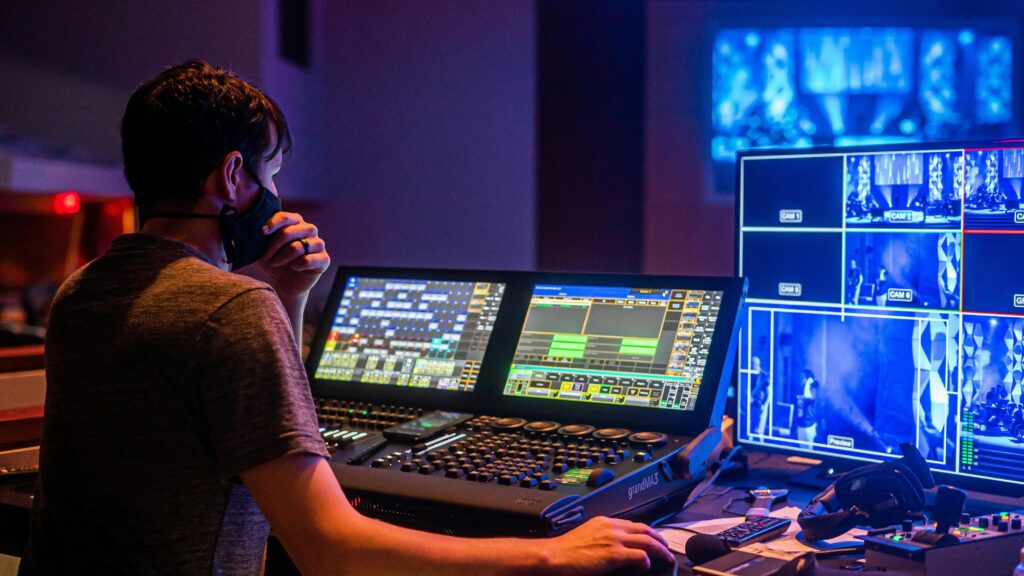
Music video production stands apart from other media workflows because it demands synchronization across two distinct AI domains. Generating or analyzing audio is one problem. Synthesizing video is another. Combining them into a single coherent output, where visuals respond to rhythm, mood, and structure, requires developers to bridge models that were never designed to talk to each other.
The typical approach involves chaining music composition or analysis models with video generation models. Beat detection, tempo mapping, or mood extraction from the audio track serves as the synchronization layer, feeding timing and tonal data into the visual pipeline. This means developers are not just calling two APIs. They are building an intermediate translation step that converts audio features into parameters the video model can act on.
That orchestration overhead adds up quickly. Each model has its own input format, inference latency, and output structure, so the glue code between them often becomes the most fragile part of the pipeline. Some platforms reduce this complexity by collapsing the multi-step chain into a single interface. Tools like Freebeat music video maker and other AI-powered content generation tools handle both audio analysis and video editing within one workflow, cutting down on the custom integration work developers would otherwise maintain.
Compared to traditional production pipelines, the combined generative AI workflow is where automation delivers the most measurable time savings. Manual synchronization of visuals to music, a process that traditionally consumes hours of video editing work, collapses into minutes when the pipeline handles beat alignment programmatically.
Scalability and Performance Trade-Offs
Moving from prototype to production exposes cost curves that catch many teams off guard. GPU compute costs scale non-linearly with video resolution and duration, so a machine learning pipeline that runs affordably on 30-second clips can become prohibitive when processing feature-length content. What worked in a demo environment rarely survives contact with real workloads.
Latency adds another layer of compromise. Real-time inference demands model compression or distillation, and both degrade output quality in ways that matter for post-production standards. Accordingly, teams end up negotiating between acceptable visual fidelity and response times their pipeline can tolerate.
Caching strategies offer partial relief. Reusing generated assets across similar scenes or segments reduces redundant inference calls, which cuts both cost and processing time. Yet knowing when a cached output is “close enough” requires its own layer of computer vision logic.
Observability becomes equally important when multiple AI services are chained together. A failure or degradation in one model propagates unpredictably through downstream steps, making monitoring across every node in the pipeline essential rather than optional.
Where This Leaves Developers
The tools powering generative AI in content creation are maturing quickly, but maturity does not eliminate complexity. It reshapes it. Powerful models still require thoughtful engineering to deploy reliably, and the integration work connecting them remains a skilled discipline.
Developers who invest in understanding pipeline architecture, not just individual tools, will find themselves best positioned as the field continues to evolve. The gap between demo-quality output and production-quality output is exactly where developer expertise matters most.
That gap is not closing on its own. It closes when someone builds the bridge.